Common Recruitment Mistakes Employers Make When Hiring Nepali Workers
Common Recruitment Mistakes Employers Make When Hiring Nepali Workers
Hiring Nepali workers is a smart decision for many employers worldwide—but only when done correctly. Many recruitment failures are not caused by workers themselves, but by avoidable mistakes made by employers during the recruitment process.
This guide highlights the most common recruitment mistakes employers make when hiring Nepali workers, explains why these mistakes happen, and shows how to avoid them through legal, compliant, and structured recruitment.
Why Recruitment Mistakes Are Costly
Even a small mistake in recruitment can result in visa rejection, delayed deployment, high worker turnover, financial loss, or legal disputes. Employers who understand Nepal’s recruitment system early can avoid these risks and build a stable workforce.
- Visa delays and rejections
- Unexpected recruitment costs
- Early worker return or absconding
- Legal and compliance issues
Mistake #1: Working with Unlicensed Brokers or Middlemen
One of the most serious mistakes employers make is dealing with unlicensed brokers instead of government-approved manpower agencies. These brokers often promise faster processing or cheaper costs but operate outside Nepal’s legal framework.
Why This Is a Problem
- High risk of fake documents
- No legal protection for employer
- Visa rejection or blacklisting
Solution: Always work with a DoFE-licensed recruitment agency.
→ How to verify a recruitment agency in Nepal
Mistake #2: Incomplete or Incorrect Demand Documents
Many employers submit demand letters and contracts with incorrect job titles, mismatched salaries, or missing legal clauses. This leads to embassy rejection or labor department delays.
Common Errors
- Wrong job titles (not matching visa category)
- Salary mismatch between contract & demand letter
- Missing employer signatures or stamps
Solution: Prepare all documents with guidance from a licensed Nepal agency.
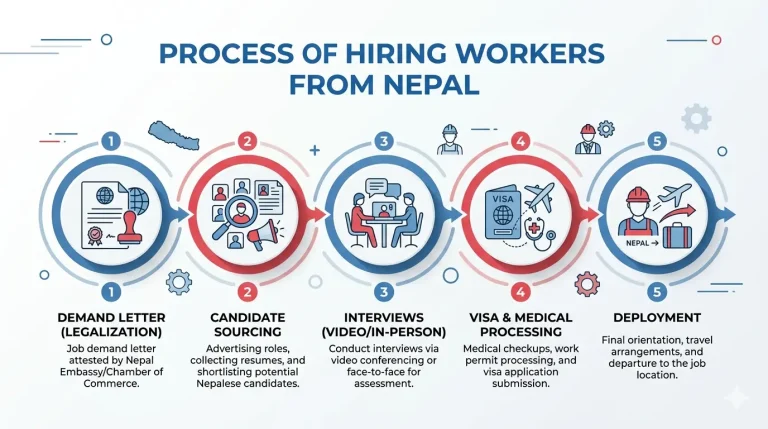
→ Step-by-step legal hiring process
Mistake #3: Choosing the Cheapest Option Only
Trying to reduce recruitment cost by choosing the cheapest agent often leads to hidden charges, poor screening, and long-term losses.
Hidden Risks
- Poor worker screening
- Higher replacement costs later
- Compliance violations
Solution: Choose transparency and compliance over short-term savings.
→ Understand real recruitment costs
Mistake #4: Ignoring Proper Worker Screening
Some employers assume all workers supplied by an agency are job-ready. Without proper skill and attitude screening, mismatches occur.
What Happens
- Low productivity
- Early resignations
- Discipline problems
Solution: Demand skill tests, interviews, and background verification.
→ Worker screening & training standards
Mistake #5: Not Understanding Country-Specific Visa Rules
Each destination country has different visa systems. Employers who apply the same process everywhere face delays and rejections.
- Saudi Arabia – Block Visa & Wakala
- UAE – Work Permit & Residence Visa
- Qatar – Visa Approval Number (VAN)
- Malaysia – Calling Visa (VDR)
→ Work visa categories explained
Mistake #6: Weak Communication with Workers
When workers do not clearly understand job roles, salary structure, or living conditions, dissatisfaction arises after deployment.
Solution: Ensure proper briefing and pre-departure orientation.
How to Avoid Recruitment Mistakes (Quick Checklist)
- ✔ Work only with licensed agencies
- ✔ Verify documents carefully
- ✔ Choose transparency over cheap offers
- ✔ Demand proper screening
- ✔ Understand country-specific rules
Internal Links (Trust & Authority)
Call to Action
Want to Avoid Recruitment Mistakes?
Mount Everest International Overseas Pvt. Ltd. helps employers recruit Nepali workers legally, transparently, and with minimal risk.